

Mind the gap, or resolve it? Whether it’s a family trait you’ve had since childhood or a space that has gradually widened over time, a front tooth gap — known clinically as a diastema — is one of the most common reasons people visit the dentist. For some, it’s a signature look they embrace; for others, it’s something they would prefer to minimise. Modern dentistry offers several ways to address a diastema, from subtle cosmetic refinements to more comprehensive orthodontic options. Understanding these choices helps you find a solution that balances appearance, function, and long-term oral health.
What is a diastema?
A diastema is a space or gap between two teeth. It most often appears between the upper front teeth but can occur anywhere in the mouth. Several factors can contribute to its formation, including genetics, a mismatch between jaw and tooth size, habits such as thumb sucking, the attachment of the gum tissue (frenum), or early loss of teeth. In some cases, a diastema is purely cosmetic. In others, it can affect how the teeth meet, influence oral hygiene, or impact speech.
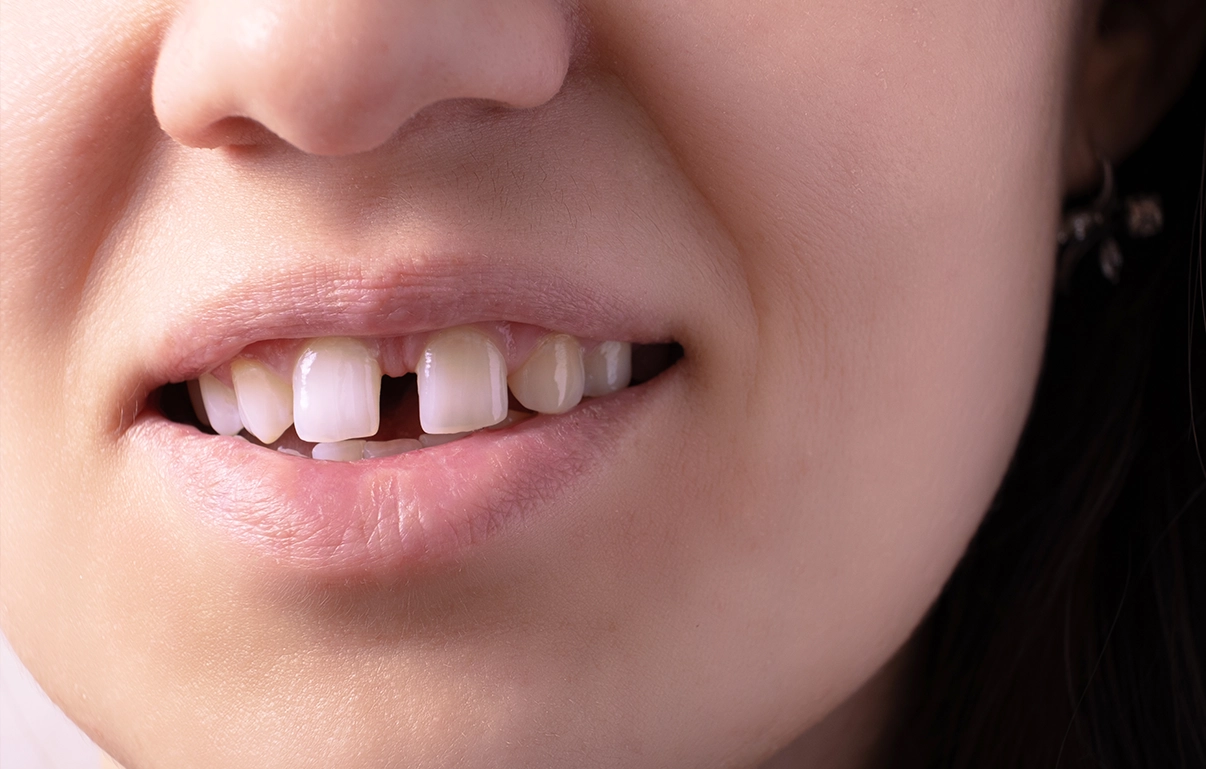
Common causes of a front tooth gap
Several factors can lead to the development of a diastema, and understanding these causes can help guide the most suitable treatment:
Genetics: Family traits often play a role. If parents or siblings have gaps, it’s more likely to appear naturally.
Mismatch between jaw and tooth size: When teeth are smaller than the jaw, spaces can form between them. Conversely, a larger jaw can create gaps even with normally sized teeth.
Frenum attachment: The labial frenum is the small band of tissue connecting the upper lip to the gums. If it is thick or positioned low, it can push the front teeth apart.
Habits in childhood: Thumb sucking or prolonged pacifier use can place pressure on the front teeth, creating gaps over time.
Early tooth loss or delayed eruption: Losing baby teeth too soon, or adult teeth erupting unevenly, can cause adjacent teeth to drift and leave spaces.
Gum or periodontal issues: In some cases, bone or gum disease can lead to tooth movement, widening existing gaps.
Understanding the underlying cause is essential. Some gaps may close naturally with growth, while others require targeted dental intervention to restore alignment, function, and aesthetics.
Why close a front tooth gap?
People choose to close a diastema for several reasons:
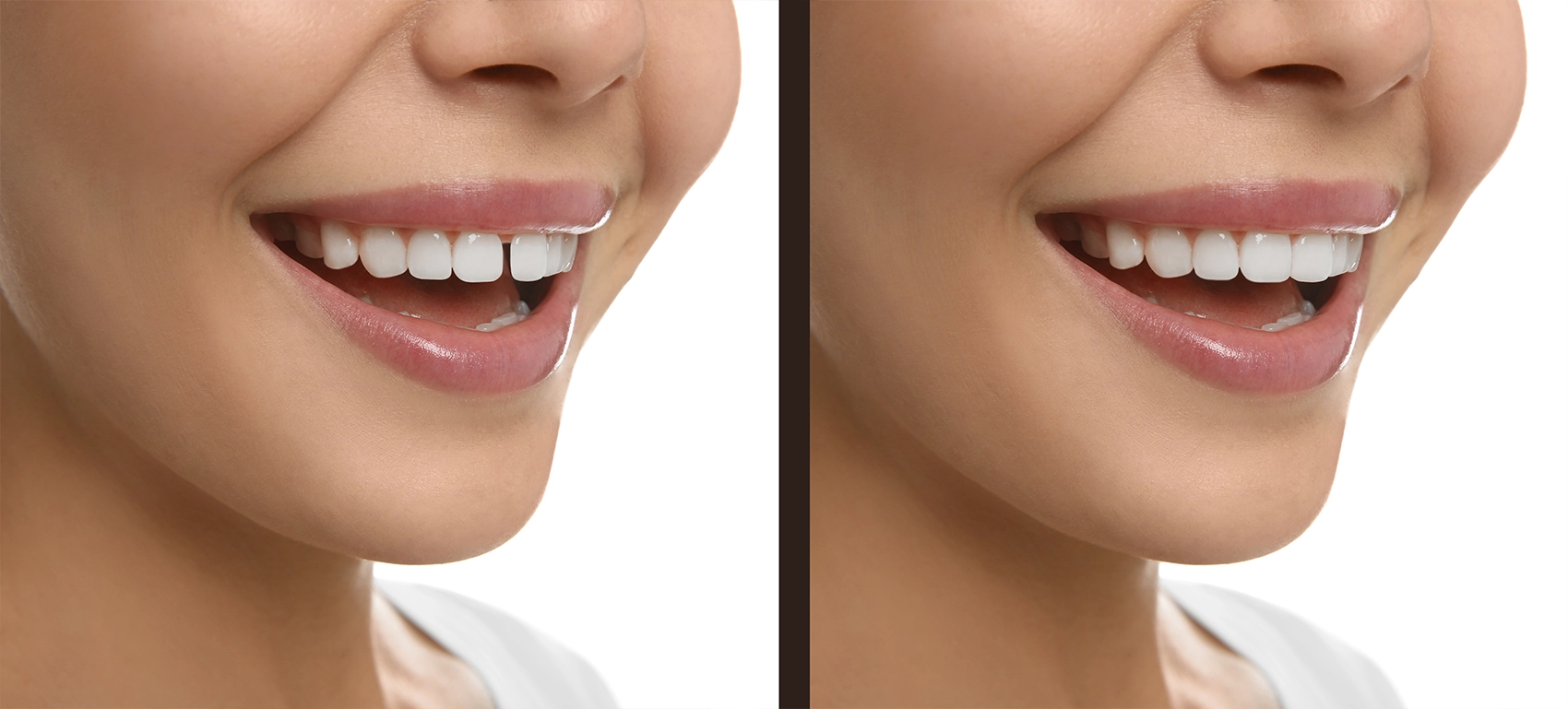
Aesthetic improvement: A well-aligned, symmetrical smile can enhance confidence and overall appearance.
Functional considerations: Larger gaps may affect how the teeth meet, influencing chewing efficiency or speech clarity.
Oral health: Spaces between teeth can trap food and plaque, increasing the risk of gum disease, tooth decay, or uneven wear.
Even a small gap can have long-term implications. Closing it not only improves appearance but also supports better oral function and overall dental health.
Common treatment options
Cosmetic bonding
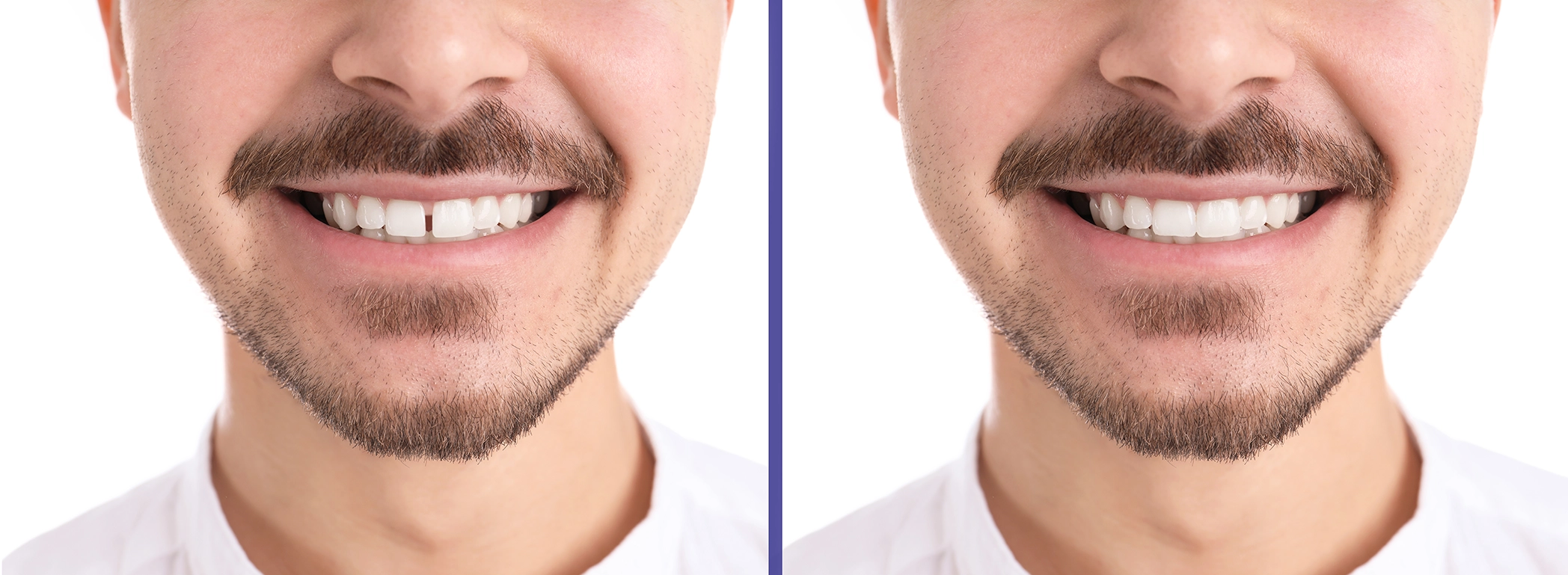
Cosmetic bonding involves applying a tooth-coloured resin to the teeth to fill the gap. The procedure is minimally invasive, usually completed in a single visit, and can be adjusted or replaced over time. Bonding is ideal for small to moderate gaps and provides an immediate aesthetic improvement without affecting the surrounding teeth.
Porcelain veneers
Porcelain veneers are thin, custom-made shells that cover the front surface of teeth. They offer a long-lasting, stain-resistant solution and can correct the shape, size, and alignment of teeth simultaneously. Veneers are suitable for patients seeking a durable, natural-looking enhancement that requires minimal maintenance.
Clear aligners
Clear aligners gradually move teeth into their ideal position using a series of custom-made, removable trays. They are discreet and effective for closing gaps caused by misalignment or bite issues. Treatment duration depends on the size of the gap and the overall alignment of the teeth. Retainers can help prevent gaps from recurring after treatment.
Traditional braces
Metal braces remain a reliable option for more complex cases where multiple teeth need adjustment. Braces can correct spacing, alignment, and bite problems simultaneously, providing a comprehensive solution that supports both oral function and aesthetics.
Frenectomy
If a thick or tight labial frenum (the tissue connecting the upper lip to the gums) is contributing to a gap, a minor surgical procedure called a frenectomy may be required. Removing or repositioning the frenum allows the teeth to move together naturally or facilitates orthodontic treatment.
Gum disease treatment
In some cases, gaps form or widen due to periodontal (gum) disease. Inflamed or weakened gums and bone can allow teeth to shift, creating spaces. Treating gum disease through deep cleaning, scaling, root planing, and ongoing maintenance can stabilise the teeth and prevent further movement before cosmetic or orthodontic treatment.
Habit correction
Certain habits, such as thumb sucking, prolonged pacifier use, or tongue thrusting, can contribute to the formation of gaps. Addressing these behaviours early, often with guidance from a dentist, orthodontist, or speech therapist, can prevent new gaps from forming and support the success of other treatments.
Choosing the right option for you
The best approach for closing a front tooth gap depends on several key factors:
Gap size and position: Larger spaces or multiple gaps may require more comprehensive treatment.
Tooth and jaw alignment: Misaligned teeth or bite issues can influence which option will be most effective.
Overall oral health: Healthy gums, bone structure, and surrounding teeth are essential for long-lasting results.
Treatment timeline and invasiveness: Some solutions, like bonding, offer immediate results, while orthodontic options take longer but provide more comprehensive correction.
Budget and maintenance: Consider not only upfront costs but also long-term upkeep and durability.
A dentist or orthodontist can evaluate your individual situation, explain realistic outcomes, and recommend a personalised treatment plan that meets both your aesthetic goals and oral health needs.
Gap closed, confidence open

A beautifully aligned smile deserves care that endures. With thoughtful maintenance and professional oversight, your smile can remain strong, natural, and confidently functional for years to come. Speak with a qualified dentist to explore the options best suited to you, and enjoy your smile like never before.