

How dummies can shape a child’s smile
When is the dummy a good idea? For many parents, dummies (also known as pacifiers) are part of the early rhythm of family life. They soothe unsettled babies, help little ones drift off to sleep, and can offer a sense of calm during those exhausting first months. Used thoughtfully, pacifiers can be a helpful and comforting tool.
As children grow, however, the habits that once helped them settle can begin to influence how their teeth and jaws develop. A child’s mouth is still forming, and over time, even gentle pressure can shape a growing smile.
Understanding how pacifiers interact with a child’s developing smile empowers parents to make informed, confident choices. Early awareness supports healthy development and helps protect the foundation of a balanced bite for years to come.

Pacifiers and the developing mouth
A child’s teeth and jaws are in a constant state of growth during infancy and early childhood. The facial bones are soft and adaptable, shaped by everyday functions such as swallowing, speaking, and muscle movement.
When a pacifier remains in the mouth for extended or frequent periods, it can disrupt this natural balance. The tongue may rest lower than normal, while the lips and cheeks exert ongoing pressure in new ways. As teeth begin to emerge, these forces can influence their position and the way the jaws relate to one another.
Occasional pacifier use in infancy is rarely a concern. The likelihood of dental and bite changes increases when the habit persists beyond the toddler years or becomes a regular part of both daytime and nighttime routines.
What is malocclusion?
Malocclusion is a clinical term used to describe teeth that are misaligned or jaws that do not meet in an ideal position. In simple terms, it refers to how the upper and lower teeth fit together when the mouth closes.
Malocclusion can affect everyday functions such as biting, chewing, and speech. In some cases, it is primarily a cosmetic concern. In others, it may place uneven pressure on teeth, accelerate tooth wear, affect jaw comfort, or increase the risk of decay and gum problems over time.
The way a child’s teeth and jaws develop is influenced by genetics as well as early habits. Prolonged oral behaviours, including pacifier use, can contribute to the development of certain types of malocclusion during these critical growth years.
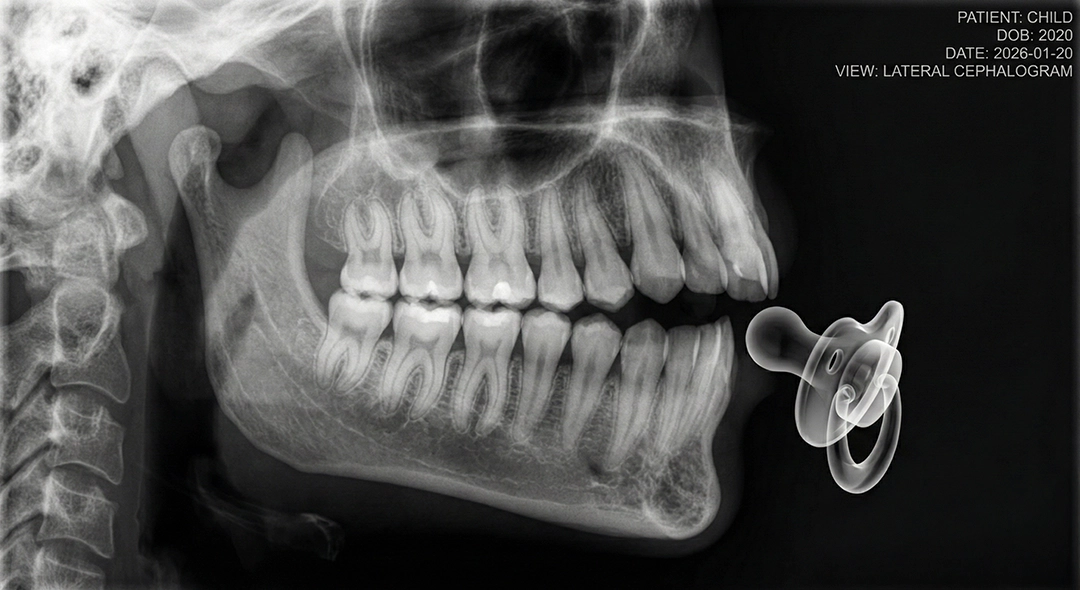
Malocclusion patterns commonly linked to pacifier use
When pacifier use continues beyond the early years, it is most commonly associated with specific and recognisable bite changes. These occur gradually as the developing teeth and jaws adapt to repeated pressure.
Open bite
An open bite occurs when the upper and lower front teeth do not touch when the mouth closes, leaving a visible gap even though the back teeth meet. This pattern is strongly associated with prolonged pacifier or thumb habits, particularly when the pacifier is held in the mouth for long periods each day.
Increased overjet
Overjet refers to the horizontal distance between the upper and lower front teeth. Extended pacifier use can encourage the upper front teeth to move forward, especially when the tongue rests in a lower position and no longer provides balanced support during growth.
Narrowed upper jaw
Ongoing pressure from a pacifier can restrict the natural widening of the upper jaw. As a result, there may be limited space for erupting teeth, increasing the likelihood of crowding or crossbites as permanent teeth begin to emerge.
Encouragingly, many of these changes are reversible in young children. When the pacifier habit is reduced or stopped early, often before the age of three, the teeth and jaws can return to a more natural pattern of development without the need for intervention.
Impacts of oral habits on dental development
Pacifiers are only one of several habits that can influence how a child’s teeth and jaws develop. Other common oral behaviours can apply similar or even greater forces during critical growth periods.
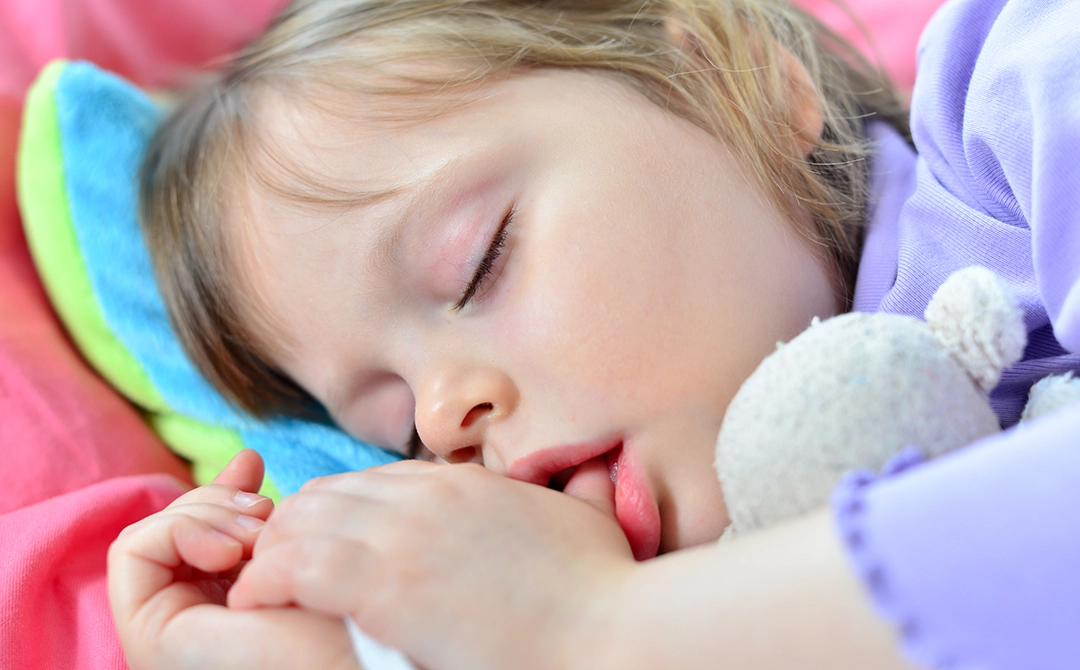
Thumb or finger sucking
Thumb or finger sucking places continuous pressure on the teeth and jaws, often more forceful than a pacifier. These habits can be harder to stop and tend to persist for longer, increasing the likelihood of changes to tooth position and bite alignment.
Mouth breathing
Chronic mouth breathing, commonly linked to nasal congestion, allergies, or enlarged tonsils, can alter the natural balance of facial muscles. Over time, this may affect jaw growth, tooth alignment, and overall facial development.
Tongue thrusting
Tongue thrusting occurs when the tongue repeatedly pushes against the front teeth during swallowing or speech. This pattern can interfere with normal tooth eruption and contribute to open bites or spacing between the teeth.
Early identification of these habits allows for timely, gentle guidance. Addressing them during the formative years supports healthier dental development and often reduces the need for more involved treatment later on.
Signs that pacifier use may be a concern
Most dental and paediatric guidelines recommend limiting pacifier use after the age of two and gradually discontinuing the habit by around age three. Beyond this stage, the developing teeth and jaws become more susceptible to lasting changes in bite and alignment.
Signs that pacifier use may be affecting dental development include:
Tongue thrusting
Tongue thrusting occurs when the tongue repeatedly pushes against the front teeth during swallowing or speech. This pattern can interfere with normal tooth eruption and contribute to open bites or spacing between the teeth.
Early identification of these habits allows for timely, gentle guidance. Addressing them during the formative years supports healthier dental development and often reduces the need for more involved treatment later on.
- Front teeth that do not meet when biting
- Upper teeth that appear to angle forward
- Difficulty closing the lips comfortably at rest
- Speech changes associated with tongue position
A dental assessment can help determine whether these changes are temporary and likely to self-correct, or whether closer monitoring or early intervention is advisable.
When to visit the dentist
Children are ideally introduced to the dentist by their first birthday or within six months of their first tooth emerging. These early visits are designed to build familiarity, provide guidance for parents, and focus on prevention rather than treatment.
If pacifier use continues beyond the toddler years, regular dental check-ups become especially important. Ongoing monitoring allows subtle changes in tooth position or jaw growth to be identified early, often simplifying management and reducing the likelihood of more complex treatment later in childhood.
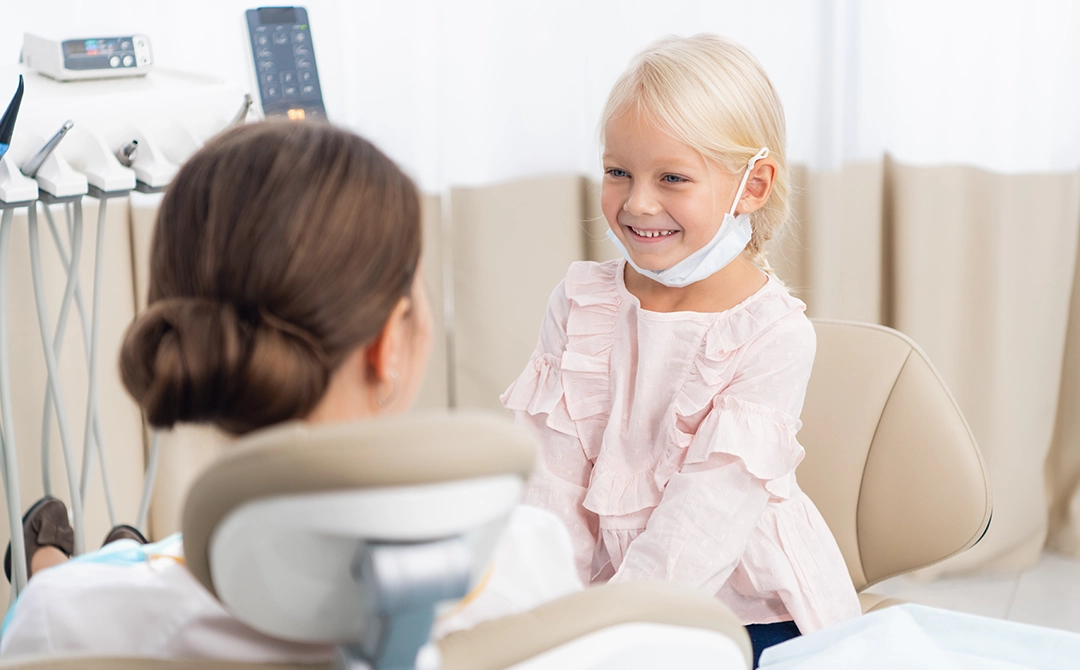
Supporting healthy dental development
Healthy dental development is built through informed choices and supportive routines.
Practical strategies that support healthy dental development include:
- Limiting pacifier use to sleep times as an initial step
- Selecting age-appropriate, orthodontic pacifiers
- Gradually reducing the habit rather than stopping abruptly
- Introducing alternative comfort measures, such as cuddling or a familiar soft toy
Positive reinforcement and patience encourage lasting change. A calm, supportive approach is far more effective than pressure or punishment.

Treating bite changes
When bite changes persist, the approach depends on your child’s age, stage of dental development, and the severity of the misalignment.
For younger children, simply stopping the pacifier habit is often enough to allow the teeth and jaws to adjust naturally. In some cases, careful monitoring over time may be all that is needed to ensure healthy development.
If intervention is necessary, treatment options vary and are tailored to the child’s needs. These can include:
Orthodontic appliances: Removable or fixed devices designed to guide teeth and jaw growth.
Space maintainers: Devices that preserve space for permanent teeth if premature tooth movement occurs.
Braces or clear aligners: Used for more persistent or severe misalignment once the permanent teeth emerge.
Habit-correcting appliances: Special devices that help discourage thumb or pacifier habits while supporting normal bite development.
Early orthodontic intervention is generally simpler, more efficient, and less invasive than treatment started later, often reducing the duration and complexity of care.
Your dentist plays a central role in assessing development, advising on the most appropriate treatment, and referring to an orthodontist when specialised care is required.
Frequently asked questions about pacifier use
How can I tell if my child’s bite is affected?
Signs include upper front teeth that angle forward, a gap between the upper and lower front teeth, difficulty closing the lips at rest, or speech differences related to tongue placement. Regular dental check-ups help identify these early.
What age is safe to stop using a pacifier?
Most dental guidelines suggest beginning to limit pacifier use around age two and aiming to stop completely by age three to minimise the risk of lasting bite changes.
Is it too late to stop pacifier use if my child is over four years old?
While earlier is better, it is never too late to stop. Children over four may still experience improvement in bite alignment, though more significant or persistent changes may require monitoring or orthodontic support. A dentist can assess your child’s development and recommend appropriate steps.
Does pacifier-related misalignment correct itself?
In many cases, minor changes to a child’s bite caused by pacifier use can self-correct once the habit stops, particularly if this occurs before the age of three. The teeth and jaws are highly adaptable at a young age, and early discontinuation often allows natural growth to restore proper alignment.
Are orthodontic pacifiers safer for my child’s teeth?
Orthodontic pacifiers are designed to reduce pressure on the developing teeth and jaws. While they may lower the risk of malocclusion compared to traditional pacifiers, limiting use and stopping at the recommended age remains the most important factor.
Can thumb sucking cause the same dental problems as pacifiers?
Yes. Prolonged thumb or finger sucking can exert similar forces on the teeth and jaws, often more intense, and can contribute to open bites, overjet, or crowding.
How can I encourage my child to give up the pacifier?
Gradual reduction, positive reinforcement, and introducing alternative comfort strategies are most effective. Limiting pacifier use to sleep, choosing age-appropriate orthodontic pacifiers, offering praise, and substituting cuddly toys or routines for comfort can help your child transition without stress.
Will braces be necessary for pacifier-related bite changes?
Braces are not always needed. In many children, the teeth and jaws naturally realign once the pacifier habit stops, especially if this happens at a younger age. If misalignment persists or is more pronounced, early orthodontic intervention can make treatment simpler, faster, and less invasive than waiting until later. Your dentist or orthodontist can assess your child’s specific situation and recommend the most appropriate approach.

Growing healthy smiles
Small steps today can lead to confident, healthy smiles tomorrow.
Pacifiers can provide comfort and security in early childhood, but knowing when and how to ease the habit helps safeguard your child’s developing teeth and bite.
Consistent dental visits, attentive oral hygiene, and early guidance build a strong foundation for long-term dental health. If you have concerns about pacifier use or your child’s bite, a dental professional can offer reassurance, clear advice, and practical solutions.
Prevention is always gentler than correction. With informed choices and supportive care, your child’s smile can develop naturally, comfortably, and with lasting confidence.